

How to Start Calligraphy: A Beginner's Guide
Calligraphy transforms words into art. This guide covers everything you need to start creating beautiful lettering today.
Choosing Your Calligraphy Style
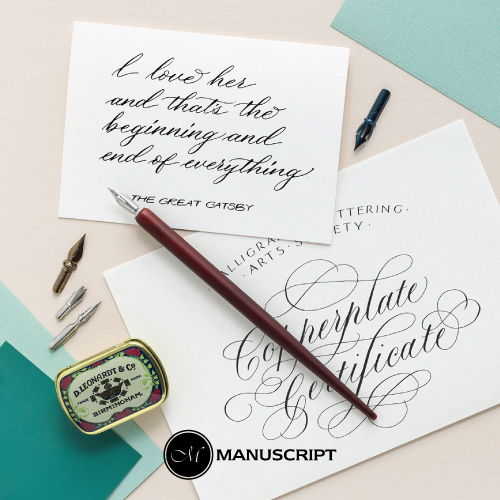
Traditional calligraphy includes Gothic, Italic, and Copperplate scripts. Modern calligraphy offers more creative freedom and is ideal for beginners. Choose whichever style appeals to you; you can always explore others later.

Essential Calligraphy Supplies
Starting calligraphy is affordable. Here's what you need:
Calligraphy pens come in two main types. Brush pens and felt-tip markers are easiest for beginners. Traditional dip pens with nibs offer more precision as you advance and require a pen holder.
Quality paper prevents ink bleeding. Look for marker paper, Bristol board, or calligraphy practice paper with guidelines. Tracing paper works well for practising over exemplars.
Ink selection depends on your pen. Brush pens have built-in ink, whilst dip pens need bottled calligraphy ink. Start with black ink for maximum contrast.
Basic Calligraphy Techniques
Calligraphy's signature look comes from one key principle: thick downstrokes and thin upstrokes. Create this by applying more pressure on downstrokes and lightening pressure on upstrokes.
Master these fundamental strokes first: upstrokes, downstrokes, curves, and compound curves. Practice each stroke repeatedly until they feel natural. Consistency matters more than perfection.

Practising Calligraphy Letters
Start with lowercase letters; they're simpler than capitals. Focus on one or two letters per session, breaking them into their component strokes.
Trace exemplars initially to understand letter construction. Then practice freehand using guidelines for consistent height and spacing. Pay attention to letter slant and baseline alignment.

Common Beginner Mistakes to Avoid
Gripping too tightly causes fatigue and shaky lines. Hold your pen with a relaxed grip and let your arm guide the movement.
Inconsistent pressure is another common issue. Remember: firm pressure on downstrokes, light pressure on upstrokes.
Always use guidelines early on. They build habits for consistent letter heights and spacing.

Calligraphy Practice Tips
Practice 15 minutes daily for best results. Consistency beats long, irregular sessions. Keep a practice journal to track your progress and stay motivated.
Set up a comfortable workspace with good lighting and a flat surface. Keep your paper at a slight angle and maintain good posture to prevent fatigue.
Where to Find Calligraphy Resources
Free practice sheets, tutorials, and inspiration are available online. Instagram and Pinterest showcase diverse calligraphy styles. Consider joining local calligraphy groups or workshops to learn from experienced artists.
For additional inspiration and techniques, check out Speedball Art's calligraphy Instagram and explore their lettering demonstrations.
Start Your Calligraphy Journey
Calligraphy opens creative possibilities for personalised cards, invitations, and home décor. With patience and regular practice, you'll see noticeable improvement in weeks.
Visit Art Shed Brisbane to explore our calligraphy supplies, from beginner-friendly brush pens to professional dip pen sets. Our team can help you choose the right tools to start your lettering journey.


